What Are The Pacific States
- What States Are In The Pacific Coast
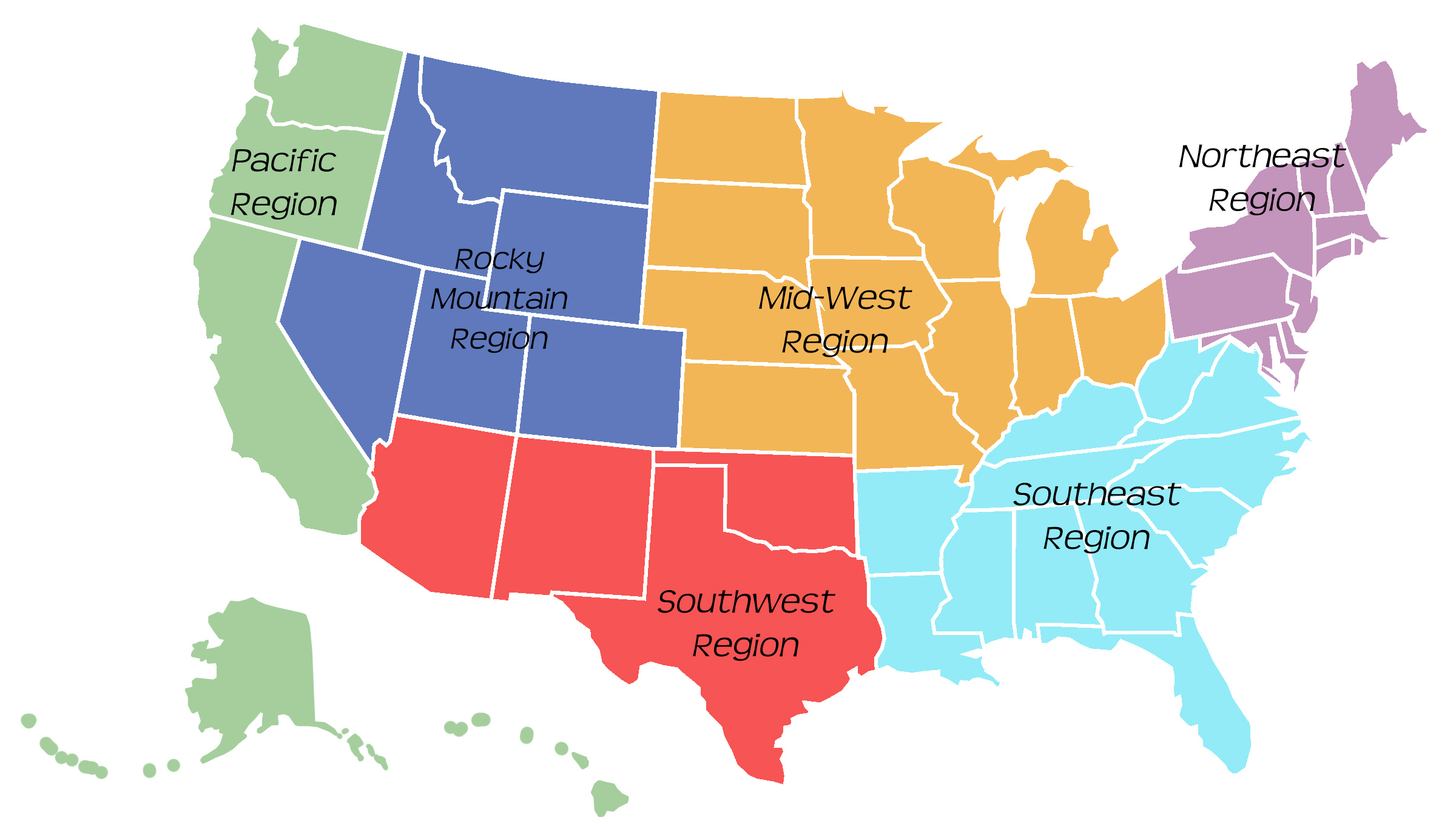
- Pacific Region Map United States
- What Are The Pacific States Of The United States
.As stated by the governing compact, PSMFC's purpose shall be “to promote the better utilization of fisheries – marine, shell, and anadromous, which are of mutual concern, and to develop a joint program of protection and prevention of physical waste of such fisheries in all of those areas of the Pacific Ocean over which the compacting states jointly or separately now have or may hereafter acquire jurisdiction.”.PSMFC supports fisheries conservation, development, management, and legislation. To accomplish this, we maintain several programs that focus on scientific, inventory and economic research and data collections, consolidation and distribution. These programs primarily provide information for those with scientific or economic interests in the field, but also aim to provide educational materials for the general public related to their areas of focus.How can you help promote the better utilization of fisheries on the West coast? Join our team of dedicated professionals. Visit our Career Center to explore the opportunities, create a profile, apply for jobs, and design a job agent to receive notifications when new positions that meet your interests and expertise are posted.The Vessel Monitoring System (VMS) Reimbursement Program was established to offset the cost of purchasing a VMS unit for the purpose of complying with fishery regulations pursuant to the Magnuson – Stevens Act. The reimbursement program was announced by the National Oceanic and Atmospheric Administration (NOAA) Fisheries Service in July 2006, and has expanded nationally since its inception.
The Pacific States Marine Fisheries Commission in collaboration with the NOAA's Office of Law Enforcement (OLE) distributes the allocated reimbursement funds to eligible, confirmed vessel owners and operators.The Pacific States Marine Fisheries Commission (PSMFC) is working collaboratively with National Marine Fisheries Service (NMFS) to distribute the funds appropriated by Congress for various fishery disasters. Currently, NMFS has requested the Commission administer the fishery disaster programs.
The Pacific Islands region of the South Pacific Ocean is called Oceaniawhen Australia and New Zealand are included. There are approximately25,000 islands, atolls and islets in Oceania. Within the Pacific Islandsregion are the subregions of Polynesia, Melanesia, and Micronesia.
Theislands of Tonga, Tahiti, and Fiji are located within two of these threeareas.Polynesia means 'many islands,' and includes within its 5million squares miles the Kingdom of Tonga and the Territory of FrenchPolynesia, where Tahiti is located. Samoa and Hawaii are also found inPolynesia. The region's name comes from the Greek wordmelas,meaning black. It was so named because of the skin color of islandnatives.Tonga is an archipelago of 170 islands. Its total land area is about fourtimes the size of Washington, D.C., measuring 288 square miles (746 squarekilometers). People live on 36 of Tonga's islands. The populationin July 1998 was approximately 108,207.
The majority of Tongans are ofPolynesian ethnic origin. About 300 Europeans also live on the islands.Christianity is the primary religion, with more than 30,000 peoplebelonging to the Free Wesleyan Church.
The monarch is the head of thechurch, which is the Methodist Church in the United States. OtherChristian religions with significant membership include the Roman Catholicand Mormon churches. Tonga's official languagesare Tongan and English. The national capital, Nuku'alofa, islocated on the island of Tongatapu. The national flag is primarily red. Onthe upper left quadrant of the flag is a white rectangle with a bright redcross on it.French Polynesia is a territory consisting of five archipelagos.
FrenchPolynesia's 118 islands and atolls span an area slightly less thanone-third the size of the state of Connecticut. French Polynesia'stotal land area measures 1,544 square miles (4,000 square kilometers).Tahiti is the best known island in French Polynesia.
The largest of theSociety Islands, it measures 33 square miles (53 kilometers). FrenchPolynesia had a population of approximately 237,844 people in July 1998.Seventy-eight percent of the population are of Polynesian ethnic origin,12 percent are Chinese, and a small percentage are French.
Fifty-fourpercent of French Polynesians are Protestant, 30 percent are RomanCatholic, and 16 percent belong to other denominations. FrenchPolynesia's official languages are French and Tahitian. Papeete,the national capital and the territory's largest city, is locatedon Tahiti. French Polynesia's flag consists of two horizontal redbands, with a larger white band in the center.
Pictured in the whitesection of the flag is a blue, white and red ship. The colors are those ofthe French flag, and France's tricolor is displayed in FrenchPolynesia on special occasions.At the eastern end of Melanesia, near Polynesia, is the Republic of Fiji.This proximity led to a Polynesian influence on the culture. Although Fijiis an archipelago of 332 islands, its total area is slightly smaller thanthe state of New Jersey. The country's total land area measures7,055 square miles (18,272 square kilometers). Approximately 110 ofFiji's islands are inhabited, and the population in July 1998 wasapproximately 802,611.
Of the population, 49 percent are of Fijian ethnicorigin, 46 percent are Indian, and the remaining five percent includesother Pacific islanders, Europeans, and Chinese. Fifty-two percent of thepopulation is Christian, with 37 percent belonging to the Methodist faith.Approximately nine percent of Fijians are Roman Catholic. Indians accountfor the 38 percent of the population who are Hindu. There is also a Muslimminority. English is the official language in Fiji, though Fijian andHindustani are also spoken. The nation's capital is the port cityof Suva. Crack advanced systemcare 10. The national flag is light blue.
The British flag is depicted inthe upper left quadrant; the Fijian shield appears on the right half. Alion on the shield holds a cocoa pod. Also pictured are stalks of sugarcane, a palm tree, bananas, and a white dove. HISTORYThe history of the Pacific Islands began thousands of years ago inSoutheast Asia.
From 3000B.C.to 1000B.C., peoples left the Malay Peninsula and the Indonesian Archipelago,migrating to islands across the Pacific Ocean. They sailed in massivedouble-hulled canoes that held up to 200 people. With no navigationinstruments, the ancestors of modern Polynesians relied onwayfinding,the use of nature to navigate. The navigational course was determined byobserving the stars, the sun, the wave currents, and the flight pattern ofbirds.The Lapita people may have reached Tonga by 3000B.C.Artifacts confirm they were living on Tonga around 1100B.C.Polynesians are believed to have reached Fiji by at least 1500B.C.They were joined by Melanesians in 500B.C.According to archaeologists, Polynesians from Tonga and Samoa settled theMarquesas Islands 2,000 years ago. Polynesians in subsequent yearsmigrated to other areas including New Zealand and Hawaii. Artifacts foundon the Society Islands indicate that Polynesians settled in Tahiti around850A.D.Polynesians established a hierarchical social structure, where childreninherited their father's power and social status.
A chief and hisdescendants ruled a territory that ranged in size from a village to aregion. One indication of status was a person's size. Obesity was asign of wealth or nobility in Tonga.Within the hierarchical governing system were power struggles. Thesestruggles sometimes resulted in war, forcing some islanders to flee andsettle other islands. Cannibalism was another aspect of war, one dictatedby Fijian and Tongan religions.
Captured people were sacrificed to thewarrior gods. The victors ate their enemies to absorb their power and toinsult the deceased and his family.A less gruesome Polynesian tradition involved family and community life.The family extended to grandparents, aunts, uncles, and other relatives,as well as the village. Family members looked after one another, respectedtheir elders, and shared with the community. When fishermen returned withtheir catch, they took what they needed and left the rest for others.Polynesians were noted craftspeople who built boats without nails. Theyhad no system of writing.
Instead, history and traditions were relayedthrough songs, dance, poems, and stories. For centuries, Pacific Islandersbelieved that gods controlled their lives.Pacific Island life changed dramatically in the seventeenth century whenEuropean explorers discovered the islands. Dutch navigator Jakob LeMairereached Tonga in 1616, the first European to visitthe islands. Another Dutch navigator, Abel Tasman, arrived in Fiji in1643. English Captain Samuel Wallis reached Tahiti in 1767 and claimed itfor England.
A year later, French explorer Louis de Bougainville landed inTahiti. He did not realize Wallis had been there and claimed the land forhis country. France gained control of Tahiti in 1842 and made it a Frenchcolony in 1880. England gained control of Fiji, while Tonga remained anindependent kingdom. In 1774, British Captain James Cook sailed throughthe islands, followed by British Captain William Bligh in 1789. In 1874,the Fiji islands were ceded to Britain.Christian missionaries brought more change to the islands. In 1797,members of the London Missionary Society settled in Tonga and Tahiti.Missionaries eventually succeeded in converting Tahitians, but they leftTonga left in 1799.
Catholic and Wesleyan missionaries also attempted toconvert the Pacific Islanders. Wesleyan ministers succeeded in convertingTonga to Christianity. The missionary influence was seen in the nineteenthcentury when members of royalty converted. Fijian King Cokobau convertedto Christianity in 1854. Such conversions ended cannibalism in the PacificIslands. Missionaries also developed written forms of Pacific Islanderlanguages that were previously nonexistent in the predominantly oralculture.
MODERN ERAFiji remained a British colony for 96 years. The island nation achievedfull independence on October 10, 1970. The country was designated a memberof the British Commonwealth with Dominion status.Tongans proudly declare that their country was the first Polynesiankingdom, the only kingdom still remaining in the South Pacific. While themonarchy existed since the tenth century, the current dynasty wasestablished during the nineteenth century. Power struggles in thenineteenth century led to civil war. The victorious chief took the nameGeorge when he was baptized in the Wesleyan faith, in honor of the King ofEngland.
When proclaimed the king in 1845, he became George Tupou I. Knownas the father of modern Tonga, the king outlawed the worship of old godsand established a constitutional monarchy. After his death in 1893, hisgreat-grandson, George Tupou II, ruled until 1918. George Tupou II wassucceeded by his 18-year-old daughter, Salote. Queen Salote was beloved byTongans as an intelligent, compassionate woman concerned with issues likehealth and medicine. She was also well-regarded internationally. TheTongan queen died in 1965, and was succeeded by her son King Tupou IV.France gained control of Tahiti in 1842, making it a colony in 1880.
Thetropical paradise attracted numerous artists and writers. French artistPaul Gaughin moved to Tahiti in 1891 and immortalized the FrenchPolynesians in his vivid paintings.
In 1946, French Polynesia became aFrench overseas territory. France's president is the chief ofstate. SIGNIFICANT IMMIGRATION WAVESHistorical accounts and church records sometimes provide a more detailedlook at migration and settlement patterns than government documents. Thisis especially true for Tongans, Tahitians and Fijians. Immigrationand Naturalization Service (INS) records list immigrant admission bycountry of origin, with Tahiti classified as part of French Polynesia.Other government entities used the much broader classification of Asiansand Pacific Islanders. This category covers people whose ancestors werethe original peoples of the Far East, Southeast Asia, the Indiansubcontinent, or the Pacific Islands.
By examining both official documentsand less formal accounts, a picture emerges of the settlement patterns ofPacific Islanders of Tongan, Tahitian, and Fijian ethnic ancestry. Whilemore information is available about the Tongan experience in America, somecould apply to Fijians and Tahitians. Three Fijians were admitted to thecountry in 1953, according to U.S. Immigration and Naturalization Services(INS) records. An equal number were admitted in 1954, along with threeFrench Polynesians and one Tongan.Waves of Tongan immigrants arrived in the United States in the 1950s and1960s. More came during the 1970s, and there was a boom in the 1980s.According to INS records for the 1950s, the admissions records were: 71Fijians in 1959, 14 French Polynesians in 1956, and 14 Tongans in 1958.During the 1960s, a record 368 Fijians were admitted in 1968. The lowfigure for annual immigration was 45 in 1967.
French Polynesianimmigrationnever rose above the 49 admissions in 1965. Tongan migration ranged fromfour people admitted in 1960 to a record 119 in 1966.During the 1970s, Fijian migration ranged from 132 admissions in 1976 to1,000 in 1979. The record year for French Polynesian migration was 1975,when 47 people were admitted. Tongan migration ranged from 133 admissionsin 1976 to 809 in 1979. Fijian migration jumped during the 1980s, whenadmission ranged from 712 people in 1983 to 1,205 in 1987. FrenchPolynesian migration ranged from 19 admissions in 1986 to 59 in 1984.In the next decade, a record 1,847 Fijians immigrated to the United Statesin 1996.
The record year for the other groups was 1991 when 1,685 Tongansand 31 French Polynesians entered. During 1997, admission was granted to1,549 Fijians, 21 French Polynesians and 303 Tongans.Migration for some Pacific Islanders began when the Mormon church sentstudents to Hawaii for higher education, and then to the United States.Others were brought to this country to work on Mormon church constructionprojects. Military service after World War II also brought PacificIslanders to the United States. They settled in California and Washington,especially Southern California cities like San Diego, Oceanside, and LongBeach.Tongans lived in large west coast cities like Los Angeles and SanFrancisco until the 1970s, when the national recession crippledCalifornia's economy.
Tongans began moving to North Texas duringthe 1970s and 1980s, seeking employment near Dallas-Fort Worth Airport.Approximately 1,800 Tongans lived in the area in 1993.According to a 1996 report to the U.S. Catholic Conference, of theapproximately 20,000 Tongans in the United States, 4,500 were Catholic.The report said significant populations lived in California in SacramentoSan Francisco's Bay Area and in the Southern California cities ofLos Angeles, Paramount, Anaheim, Upland, and San Bernardino.In 1992, approximately 6,000 to 8,000 Tongan Americans lived in SanFrancisco's Bay Area. Washington State's Asian and PacificIslander (API) population grew 59.1% in six years, from 215,454 in 1990 tomore than 342,900 in 1996. In California, the API population rose fromnine percent in 1990 to 11 percent in 1996, according to a 1998 statereport. That increase primarily came from migration, with 452,000 Asianand Pacific Islanders migrating to the state between 1990 and 1996. Netmigration averaged 71,000 from 1991 to 1996, while the natural increase(births minus deaths) averaged 46,600.
From 1993 to 1996, this was theonly group to experience positive net migration to California.There were 7,700 Pacific Islanders living in Utah in 1990, according astate report. The total consisted of 3,611 Samoans, 1,760 Samoan and 1,334Hawaiians. Acculturation and AssimilationLanguage was the first barrier for Pacific Islanders who migrated to theUnited States. A limited knowledge of English caused problems whenislanders sought housing, employment, health care, and legalrepresentation.
The Catholic Tongan Community of North Texas chronicledthe language barrier in a 1993 report. That report was presented at aregional meeting that drew Catholic Tongans from locations ranging fromSan Francisco, California, to Sparks, Nevada. Those who attended concludedthat bilingual educational programs were needed, along with youth-orientedprograms to keep students in school and away from gangs and drugs.Similar concerns were voiced at the 1998 Polynesian Summit conferences,organized by the state of Utah Office of Polynesian Affairs (OPA). Thatyear, Tongans in Salt Lake City raised the issue of racism at a Septembermeeting regarding ethnic fairness in the legal system.
Some Polynesianssaid they were afraid to use the legal system, believing that it'works against them because of the color of their skin,'according to a meeting report.Although Pacific Islanders faced intimidating challenges to assimilation,their cultural concept of community provided valuable support. Just as thevillage used to help its members, assistance came from organizations suchas the OPA, Catholic Tongan groups, and the Pacific American Foundation.In addition, Tongans, Tahitians and, Fijians participate in the PacificIslander Festival, a weekend event held annually in Southern Californiasince 1990. TRADITIONS, CUSTOMS, AND BELIEFSKava(pronounced 'kah-vah'), a nonalcoholic drink made with theground root of the pepper shrub, is a ceremonial beverage for Tongans andFijians. Calledyaqona('yanggona') in Fiji, the mildly intoxicating beverage isconsumed during important occasions like births, weddings, deaths, and thearrival of a dignitary. Kava is also drunk socially.
Etiquette requiresvisitors to Fijian villages to bring it to the chief. Other etiquetteincludes thewearing of shoes in the house.
Also, it is considered rude to touch aFijian on the head.Centuries of island life are reflected in South Pacific legends thatsometimes have some truth. According to an ancient Fijian myth, the soundof women singing lures massive turtles from the sea to hear their voices.The Calling of the Turtles is a reality that continues today. Turtles riseto the water surface to hear the singing of women villagers from Naumanaon the island of Kaduva.Another fact-based legend concerns firewalking.
Fijians from the island ofBequa walk across hot rock without burning their feet. The firewalkers saythe god Veli give them the power to do this. Another Fijian legend has todo with the presence of red prawns in cliff pools. Supposedly, the prawnswere a gift to the daughter of a Vatulele chief.
The red crustaceansdisgusted her, and she had them thrown from a cliff.Polynesian mythology traces the beginning of Tonga to the hero Maui. WhenMaui was fishing south of Samoa, he pulled up Tonga's islands oneat a time. He walked across some islands and flattened them. The untouchedislands remained mountainous. CUISINEWhile language and traditions changed as Polynesians migrated to otherislands, Tongans, Tahitians, and Fijians still hold communal feasts. In anout-door pit that Tongans call anumu('oo-moo'), a whole pig is roasted with foods like chicken,fish, meat, sweet potatoes, fish andtaro(a starchy tuber).
Tongans cook the feast with taro leaves, whileTahitians and Fijians add banana leaves.Pacific Islander cuisine includes numerous types of fish, fresh fruit likebananas and coconut, breadfruit,cassava(a starchy plant), and sweet potatoes. Corned beef is also popular and iscooked in Tonga with taro leaves. Tongans also combine taro with othermeats, or serve it with onions or coconut milk. A favorite Tahitiandessert isgateau a la banane('ga-tow a la bah-nan'), which is French for banana cake. TRADITIONAL COSTUMESTongans wearta'ovala('tah ah vah-la'), a woven-leaf mat worn around the waist.Women sometimes wear a smaller version called akiekie('key-ah keyah').
Ta'ovalas come in everyday andfancier varieties for special occasions.In Tahiti, people wear atiare(a hibiscus blossom) behind one ear. A flower worn behind the right earmeans the man or woman is available. When placed behind the left ear, thewearer is spoken for. The tiare is also added to a crown of braided palmfronds and greenery. Fijian dancers wear skirts of shredded leaves andpaint their faces for war dances. HEALTH ISSUESFor centuries, Pacific Islanders regarded obesity as a sign of wealth ornobility.
This excess weight can lead to diabetes. Hypertension is anotherconcernfor Pacific Islanders. A 1998 California Department of Health Servicesreport indicated that Pacific Islanders living in the state were'less likely to be aware of their hypertension and to be undertreatment with medication' than people from other ethnic groups.The report concluded that Asians and Pacific Islanders were likely to relyon traditional remedies, perhaps because of the lack of health careproviders of from their ethnic background.Pacific Islanders face other health issues.
Pacific Islander Americanshave the highest mortality rates for most cancers and incidences ofchronic diseases, smoking, and binge and chronic drinking. In addition,they have the lowest rate for prenatal care and immunization of children.The Oahlana Laulima project sought to address these concerns. Theproject's goal is a national organization to serve PacificAmericans health concerns.
This will be accomplished through'advice, education, information, service and volunteerefforts.' The foundation noted a connection between poor health andthe cultural insensitivity of health care providers. That insensitivitywould make people reluctant to seek preventive care. Economics also playeda role, with access to care limited by lack of medical insurance, highcosts of care, and medical treatment.The first phase of Oahlana Laulima involved a one-year study of successfulhealth care centers for underserved minority communities in California,Washington, Virginia, Hawaii and the District of Columbia. During the nextphase, the 'Family of Working Hands' in 1997 applied whatthey learned at the Carson Community Health Center in Carson, California. LanguageFijian, Tahitian and Tongan are part of the large Austronesian, orMalay-Polynesian, family of languages. Also included are languages such asHawaiian and Samoan.
During centuries of migration to other islands, thewords changed. However, some similarities remain. The word for fish isikain Fijian and Tongan. In Hawaiian, fish isi'a.Language varies within a country, too.
Fiji has 300 dialects as well asthe Standard Fijian language.FijianIn Standard Fijian, there is one sound per vowel. These are pronounced:'a' as in 'father,' 'e' in'get,' 'i' in 'police,'o' in 'most,' and 'u' in'zoo.' When two vowels are together, the first one ispronounced. A long vowel is marked with a line called a macron over thetop. Pronunciation is lengthened. Most Fijian consonants sound the same asEnglish.
The exceptions are: 'b' is pronounced'mb;' 'd' is pronounced 'nd;'th' as in 'that;' 'g' as in'ring;' 'k,' 'p' and't' are pronounced without a puff of breath; the'r' rolled as in Spanish; and 'ng' as in'hunger.' Common Fijian greetings and expressions include:Ni sa yadra—good morning;Ni sa bula—hello;sa moche—good bye;yalo vinaka— please; andvinaka—thank you.TonganTongan vowels are pronounced as follows: 'a' as in'can;' 'e' as in 'bet;'i' as in 'in;' 'o' as in'not;' and 'u' as in 'put.' Consonants 'f,' 'h,' 'l,'m,' 'n,' and 'v' are pronouncedas in English, However the 'k' is pronounced like the'gh' in 'gherkin;' the 'ng' asin 'singer;' the 'p' is midway between'p' and 'b;' the 's' has aslight 'sh' sound; and the 't' is between't' and 'd.' Accent stress is usually on thelast syllable. An apostrophe called a glottal stop (') represents aspace and a slight pause. Common Tongan greetings and phrases include:Malo 'e lelei—hello;malo tau ma'ue pongipongi ni— good morning;faka molemole—please;malo—thank you;fefe hake—how are you?; andnofo—Good bye.TahitianTahitians vowels are pronounced as follows: 'a' as the vowelin 'cut'; the 'e' say; an 'i' in'police'; 'o' as in 'old'; and'u' as in flute.
The consonants 'f,'m,' 'n,' and 'v' are pronouncedas in English. But 'h' is pronounced as in'hat' unless it follows an 'i' and comesbefore 'o.' An 'h' in 'iho' has'sh' sound. In other consanants, the 'p' aspronouned in 'spoon' (shorter sound); the 'r'is sometimes rolled; and the 't' as in 'stop.' Common Tahitian greetings and phrases include:Ia ora na— good morning;nana—good bye;maruru—thank you;Manuia—cheers;marite—American; andaita p'ape'a—no problem. EDUCATIONParents who migrated from the Pacific Islands sometimes did not realizethe importance of education in the United States.
For example in the NorthTexas Tongan Catholic Community, one out of five students graduated fromhigh school. Few of those went to colleges and universities. The high costof an education was a factor, along with a lack of knowledge aboutfinancial aid.During the 1990s, organizations such as the Utah Office of PolynesianAffairs (OPA) and The Pacific American Foundation developed programs tokeep students in school. In Utah, 21.1% of Pacific Islanders dropped outof school. To lower that statistic, OPA director William Afeaki reinstatedthe Polynesian Young Achievers Award in 1997, which honored exceptionalstudents. Similar programs were instituted in Southern California withtutoring and scholarships set up the Pacific American Foundation.In San Diego, The Pacific American Foundation began concentrating on theeducational needs of Pacific Islanders in Southern California, Thefoundation celebrated several successes in 1996.
Volunteers tutored 10students tutored for the Scholastic Aptitude Test; all enrolled in two andfour-year educational institutions. A scholarship recipient graduated fromSouthwestern Law School.
The foundation also founded a parent-studentcounseling program. Families of pre-teenagers learn about prerequisitesand experience needed for higher education. Older students and theirfamilies learned about college financing, career counseling, grants, andloans.
During 1999, the foundation worked to set up a learning centerpartnership program to assist the parents of Pacific American childrenbetween the ages of three and eight. The foundation also worked on aprogram to help parents to obtain computers and software. By May of 1999,the foundation offered two scholarship programs and intensive SAT tutoringfor high school juniors and seniors. WEDDINGSA traditional Tongan wedding is a family event. After the couple falls inlove and decides to become married, the family plans and pays for theevent. Special attention is paid to the elders' opinions.A special ta'ovala is worn, made of a soft, silkyngafi nagafi('gnaw-fee gnaw-fee'). This traditionally comes from Samoato symbolize the connection with Polynesia.
The ngafi nagafi isbrownish-colored and decorated with feathers. Husband and wife wear thewedding ta'ovala again on the first Sunday after their marriage. FUNERALSFor Tongan funerals, a dark brown ta'ovala is worn. The size of theta'ovala indicates the mourner's relationship to thedeceased. A larger ta'ovala signifies a closer relationship. When arelative or close friend dies, adults and children wear black.
When amember of the royal family dies, Tongans wear black for a year. Familiesset the length of mourning times when a member dies.
Tongan Americanscarry on the tradition of the extended family preparing food and gatheringfor up to five days after the funeral. ReligionThe efforts of Christian missionaries in the Pacific Islands are reflectedin the faiths of Pacific-Islander Americans. There are 8000 PacificIslander members of the United Methodist Church in the United States. Thechurch has 23 Pacific Island United Methodist congregations and 97 PacificIsland clergy.
Catholics accounted for 4500 of the 20,000 Tongans livingin the United States. Fijian-Americans and Tahitian-Americans are alsoadherents of both faiths.While denominations vary, Pacific Islander tradition is interwoven withreligious services. Worshippers value a service in their native language.Tongan-American ministers and congregation usually wear ta'ovalas.In Tonga, where the king is the head of the church, religious observancesaffect the calendar. Government and shops close down for Good Friday.Tongans in the United States try to take that dayoff. Tongans in both countries attend services leading up to the sunriseEaster service. Government also takes a vacation that extends from theweek before Christmas until the first week in January. Tongan Americansknow that this is the best time to visit family in the South Pacific.Pacific Islanders of all faiths participate in out-reach programs.
TheCatholic St. Joseph Women's Association in San Bruno, California,was formed in 1977 to raise funds for seminarians studying for thepriesthood in Tonga.
In 1984, the association began issuing scholarshipsand awards for educational and athletic accomplishments. Employment and Economic TraditionsAlthough the U.S. Department of Labor does not have specific employmentinformation about Pacific Islanders, other accounts provide an economicpicture that can be bleak.
During the recession of the 1970s and early1980s, Tongan-Americans began migrating to North Texas. Most who migratedfound employment at the Dallas-Fort Worth Airport, primarily in foodservice and transportation.
Others did cleaning work at the airport,office buildings, movie theaters, and restaurants. Most jobs paid minimumwage, so many Tongans worked two jobs or overtime to support theirfamilies. Children of working age were urged to find jobs to help supporttheir families. In addition, Tongan-Americans performed yard work tosupplement wages. These experiences were common to other Pacific Islandersliving in the United States.Language was often a barrier towards obtaining higher paying work. Anotherobstacle was the Pacific Islanders' centuries-old traditionalvalues, which were at odds with the American idea of success.
'InTonga, people live in extended families in which everyone helps each otherthrough agricultural gain. There are very few who hold professionaljobs,' Tongan Percival Leha'uli wrote in the program for the1994 Pacific Islander Festival.In Tonga, men are the providers, while women are the homemakers. Peoplevalue the simplicity of their lives. 'The idea of moving to atechnological society is foreign to most Tongans,' Leha'uliwrote. That situation isn't limited to Tongans. 'While thereis a growing number of Pacific Americans owning small businesses, it is adaily challenge just to stay afloat,' David E.K.
Cooper wrote in anessay on The Pacific American Foundation website. In 1999, he waspresident of the foundation, which strives to improve the economicoutlook. The foundation's Pacific American Leadership Centeroffered its first forum in Claremont, California, in April of 1998.
Theeight men and eight women who attended the two-day seminar learned how todevelop leadership skills within a cultural context. Politics and GovernmentPacific Island migration largely began after World War II. For some men,military service was the route to that migration. Although the U.S.government did not track active duty service by ethnic origin untildecades later, an examination of the 1999 U.S. Department of Defensemanpower records provides some information. However, these recordsdon't provide the full picture.
The military ethnic classificationfor active duty personnel places Tongans and Tahitians in the Polynesiancategory. Fijians are among the groups categorized as Melanesian.As of March 31, 1999, the Army's ranks included 534 Polynesian menand 113 women. There were 34 male officers and five female officers. Alsoin that Army at that time were 102 Melanesian men and 14 women. Two menwere officers.
In the Navy on March 31, 1999, there were 251 Polynesianmen and 46 women. Nine men and four women were officers. On duty at thattime were 29 Melanesian men and 11 Melanesian women. Three Melanesian menand two women were serving as officers. On March 31, 1999, five malePolynesian officers, 56 enlisted men, and nine enlisted women were servingin the Marine Corps.
Melanesians accounted for nine of the Marine Corpsofficers and 11 enlisted men. On duty with the Air Force on March 31, 1999were 13 Polynesian men, and three were officers. Of the 11 Polynesianwomen serving, one was an officer.A look at all branches of service indicated that the Coast Guard attractedthe most Pacific Islanders, a people descended from wayfinder origins.
OnMarch 31, 1999, 795 Polynesian men served with the Coast Guard. Fifty-onewere male officers. Of the 167 Polynesian women on duty, 10 were officers.At that time, 143 Melanesian men were on active duty with the Coast Guard,and six were officers. Also serving were two Melanesian women.
RELATIONS WITH FORMER COUNTRIESIt has long been a practice for people who migrate to the United States tosend money home to their families. This is called a remittance, andremittances were an important source of revenue for Tonga according to theCIA 1998 World Fact Book.Tonga is an agricultural-based economy. The country exports copra,vanilla, and squash pumpkins. Sugar is Fiji's chief export. Tourismis an important industry. Approximately 250,000 people visit Fiji eachyear.
Tourism accounts for 20% of French Polynesia's gross domesticproduct. France began stationing military personnel in French Polynesia in1962. Since then, a majority of the work force is employed by the militaryor in tourism-related jobs. ARTManisela 'Monty' Fifita Sitake (1952– ) was one ofthree founders of the Literature and Arts Heritage Guild of Polynesia inSalt Lake City, Utah.
He was born in Nuku'alofa, Tonga, andgraduated from Brigham Young University in Provo, Utah, with a degree inEnglish literature in 1984. He, Filoi Manuma'a Mataele, and SioneAke Mokofisi started the guild in 1998 to help Polynesians with artistictalents and skills. Sitake has served as the guild president since itsinception.Sitake is also an author who writes in both Tongan and English.
He prefersto write in his native tongue to preserve the Tongan language, and toencourage the importance of Polynesian literature. Sitake also playsguitar, ukulele, harmonica, and trumpet, and has recorded a compact discmixing Tongan and western music.Filoi Manuma'a Mataele (1968– ) is vice president of theLiterature and Arts Heritage Guild of Polynesia in Salt Lake City, Utah.He was born in Nuku'alofa, Tonga. He is also involved in smallbusiness and management.
JOURNALISMSione Ake Mokofisi (1951– ) was editor in chief ofPolynesia Magazine,the online magazine published by the Literature and Arts Heritage Guildof Polynesia. He was also a founder of the Literature and Arts Heritageguild. Born Nukunuku, Tongatapu, Tonga, he is a freelancewriter/photographer and has served as the editor ofKe Alaka'i(on the Brigham Young University-Hawaii campus),Alaska Sports,andRugbymagazines. He worked as a reporter at Hawaii'sNorthshore News, Anchorage Daily News, Alaskan Journal of Commerce,Alaskan Oil & Natural Resources News,andTongan International,a Tongan newspaper based in New Zealand. He plays the guitar, ukulele,and was a member of the band, the Liahona Seven.
POLITICSFilia (Phil) Uipi (1949– ) was the first Polynesian to become amember of the Utah House of Representatives and the first Tongan to becomea legislator outside of Tonga. He was born in Fotuha'a, Tonga. Upongraduating from the University of Utah Law School, Uipi was admitted tothe state bar in 1986. A Republican, he was elected to two terms in thestate legislature, representing District 36 from 1990 to 1994. He chairedthe House Judiciary Committee during his second term.
His voice was amongthose rallying for the establishment of the state Office of PolynesianAffairs (OPA). After leaving elected office, he served as the firstchairman of the OPA's Polynesian Advisory Council.
He served onother advisory boards, and by mid-1999, he was the only Tongan lawyer witha private practice in Utah. SOCIAL ISSUESViliame Niumataiawalu is a longtime advocate of Fijian self-improvementand cultural awareness. He moved to Sacramento, California, in 1993 andbecame concerned about the plight of Fijians in America. In 1994, hefounded the American Fiji Islanders Association, a nonprofit organization.Its goals included recognition of Fijian contributions and providingassistance in immigration, housing, employment, and language skills.While working in Fiji and Australia during the 1960s, he became concernedabout laborers in the business where he worked. Believing they wereunderpaid, he helped organize a Credit Club. Members made bi-monthlycontributions into a fund that was used to provide low-interest loans forsocial and educational needs.
When working in Utah from 1990 to 1992, hewas active in the Asia and Pacific Islanders Association. He promotededucation and social development for Pacific Islanders. He returned toFiji in 1999. KPOP-AM (1360).'
Ports of Paradise' is a weekly syndicated one-hour radioprogram featuring South Seas music from the 1920s to the present broadcastSundays at 9 a.m. Pacific Standard Time. Syndicated broadcasts are heardin: Albany, New York, on WLAL-AM(1190); Las Vegas, Nevada, on KLAV-AM (1230); and Anchorage, Alaska, onKKHAR-AM (590).Contact:J Hal Hodgson, Executive Producer.Address:P.O.
What States Are In The Pacific Coast
Box 33648, San Diego, California 92163.Telephone:(619) 275-7357.E-mail:aloharn@portparadise.com.Online. Organizations and AssociationsLiterature and Arts Heritage Guild of Polynesia.The nonprofit guild in Utah was founded in 1998 to develop and promote theliteracy and artistic talents of Pacific Islanders. Theorganization's goals include providing opportunities for artists tomarket their work and youth programs in areas such as literacy andhistorical traditions.Contact:Manisela 'Monty' Fifita Sitake, President.Address:P.O. Box 57978, Murray, Utah.Telephone:(801) 495-3560.The Pacific American Foundation.The foundation was founded in 1993 as a national organization dedicated toimproving Pacific Islanders' lives by helping them to helpthemselves. The foundation educates and provides information todecision-makers and leaders about areas of public and policies that affectAmericans who trace their ancestry to the Pacific Islands.Contact:Al Pauole, Executive Director.Address:1710 Rhode Island Avenue, NW, Washington, D.C.Telephone:(206) 282-4993.Online.Polynesia, Polynesia!Founded in 1996, this is a nonprofit cultural heritage society thatfocuses on Polynesia as a connective group. The group's purpose isto promote and preserve Polynesia's culture. The organizationpresently offers classes, seminars, workshops and meetings to enhancecultural understanding.
Pacific Region Map United States
It also is to provides support, counseling, andassistance to needy or troubled families.Contact:Vern Chang, President.Address:P.O. Box 365, Fremont, Californian.Telephone:(408) 972-0107.State of Utah Office of Polynesian Affairs.One of four offices created in 1996 by Governor Michael O. Leavitt toadvocate and promote cooperation and understanding between governmentagencies and ethnic citizens. The governor appointed William Afeaki as thefirst director.Contact:William Afeaki, Director.Address:324 South State Street, Fifth Floor, Salt Lake City, Utah.Telephone:(801) 538-8678.Tongan History Association.Academic association founded in 1989.
What Are The Pacific States Of The United States
Main purpose is to study Tonganhistory up to the present.Online. Museums and Research CentersCenter for Pacific Islands Studies.Contact:Letitia Hickson, Editor.Address:University of Hawai'i at Manoa, 1890 East-West Rd., Honolulu, HI96822.Telephone:(808) 956-7700.Fax:(808) 956-7053.E-mail:ctisha@hawaii.edu.Polynesian Cultural Center.The 43-acre site has re-creations of the villages of Tonga, Tahiti, Fijiand four other Polynesian islands.
An open-air shopping village featuresarts and crafts. Cultural demonstrations include dance performances.Contact:Lester Moore, President.Address:55-370 Kamehameha Highway, Laie, Hawaii 96762.Telephone:(808) 293-3333.